Simone de Beauvoir (1949), The Second Sex
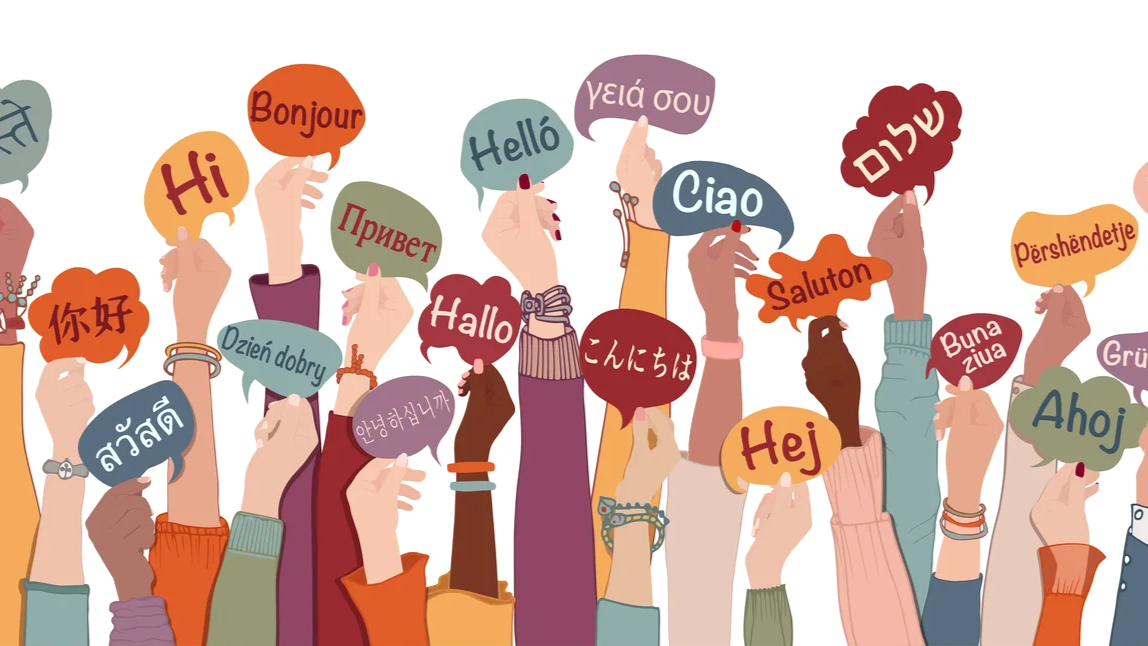
Do you know how many people in the world have found a new home overseas? According to the UN 2020 data, the number has reached an estimated 281 million, which is 3.6% of the global population. In Australia alone, 8.2 million residents were born overseas, making up 30.7% of the total population (ABS Census 2023).
The world is changing at an unprecedented pace, and it's only getting harder to keep track of the stories churned out by the media. But let's slow down and ask ourselves, do we see society as a melting pot or a beautiful mosaic?
In this article we'll talk about the concept of "Othering":
- What it is and where it stems from.
- The negative implications.
- The impact of media on people's perception of culturally and
linguistically diverse groups and individuals.
- How to minimise Othering to create more inclusive communities.
What is Othering?
In simple words, Othering is an "us vs. them" way of thinking about social relationships. It is a dual process, whereby the majority builds its inclusive group identity through constructing an excluded "Other" (Hall, 1997). As a result, the out-group individuals are perceived and treated differently from the in-group members.
Is Othering Natural?
In a way, the "self vs other" juxtaposition is intrinsic to humans. Historically, building a close-knit community with a strong in-group identification and setting the borders with the potentially hostile outside world was a means of survival.
The modern form of Othering, however, does more harm than good. This distinction typically involves attributing negative characteristics to the 'outsiders'. The majority is seen as 'normative', whereas the minority is labelled as divergent, not fitting the social "norm".
The origins of the concept
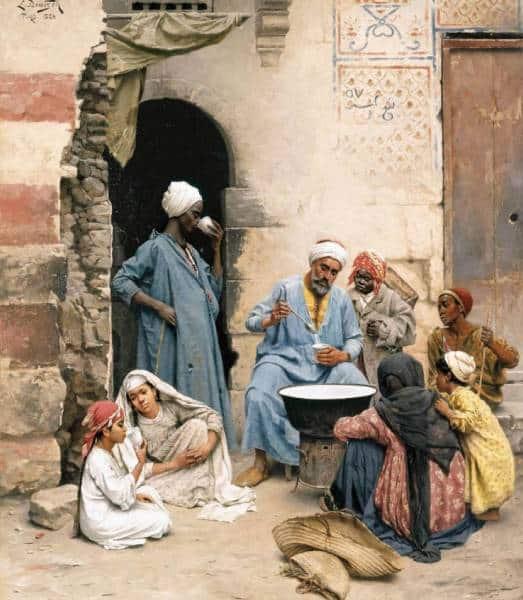
The concept of Othering appeared in the postcolonial period of the 1970s and 1980s. It was Spivak (1985) who first developed the term while studying the discourses which colonial masters in India used in regards to local people. Building upon E. Said's (1978) term of "orientalism" -- the Western depiction of the Eastern world, he concluded that these identities are subjective rather than real. Thus, cultural communities are "imagined communities".
Who's Othering, who's being Othered?
It would be wrong to assume that social identities are innate. Each society establishes categories that help interpret the world around and people's place in it. The social categories can be, for instance, gender, age, class, ethnicity, nationality, and so on. But how does a natural comparison become discriminative?
Othering is a tool in the hands of an empowered group. Othering splits the society into those who are seen as "normal" and those who are "different", creating a social hierarchy and exclusion.
This tendency is most obvious in the Western countries with a colonial history, like the USA, UK, and Australia. The portrayal of diverse cultural groups doesn't even need to be negative for Othering to take place, as explained in this Harvard Business Review article. They are still compared against the prevalent white, middle- to upper class, heterosexual Christian population as a default.
Facilitators
Political structures, people of authority, educational institutions, the media and religious organisations hold the most power within the society. Therefore, they have the strongest influence on shaping people's idea of the social and cultural norm.
Migration and mass media
Mass media is not only a primary source of information for a broad audience, but it can also be a source of prejudice, stereotyping and alienation.
Since most nationals have much less personal contact with migrants, than with their closest social groups, they are likely to form their assumptions based on the images displayed in the media. The task of the media is to inform the public about social events and problems. However, the news do not always present objective facts, and are often the product of the journalists' interpretation. Journalists are in the position to select the content and frame it using particular language. In other words, they choose what story to tell and how to tell it.
When the media landscape is dominated by journalists who belong to the majority group (e.g. European, white American, white English-speaking Australian), the narrative is based on a homogeneous, hegemonic vision of society. So, the migrant is more likely to be portrayed as the antagonistic Other. And a certain image of the migrant becomes the status quo.
Portrayal of the migrant
Sociologists have done extensive research on the media discourse and identified a number of common 'roles' of migrants in news stories. Among these are:
- The cultural Other. The person of a different ethnic and cultural background. The people who speak a different language, practice other religions, have their peculiar values and traditions (Haynes et al., 2006; Lutz, 1991; Razack, 2004).
- The economically useful Other. This type refers to migrants who arrive and live in the country as guest workers, thereby contributing to the local economy (Fassmann, Münz, & Seifert, 1997).
- The threatening Other. The person of a different ethnicity who poses a threat to the national society and its public security (Bigo, 2002; Haynes et al., 2006).
- The criminal Other. Similarly to the threatening other has committed an offence or potentially endangers the safety of the community (Baldacchino & Sammut, 2015; Shoshan, 2008).
Manifestations of Othering
When regularly exposed to such negative depictions, people consciously or unconsciously cultivate the assumption that a certain minority group poses a threat to the favoured majority population. Often, they are not even aware that the assumptions turn into behaviours. Some common forms of implicit discrimination can be:
- Seeing people as members of their social groups in the first place, rather than unique individuals.
- Attributing positive qualities to one's in-group members, and negative qualities to the 'outsiders'.
- Low to no trust in people of other social groups.
- Fearing people from other social groups.
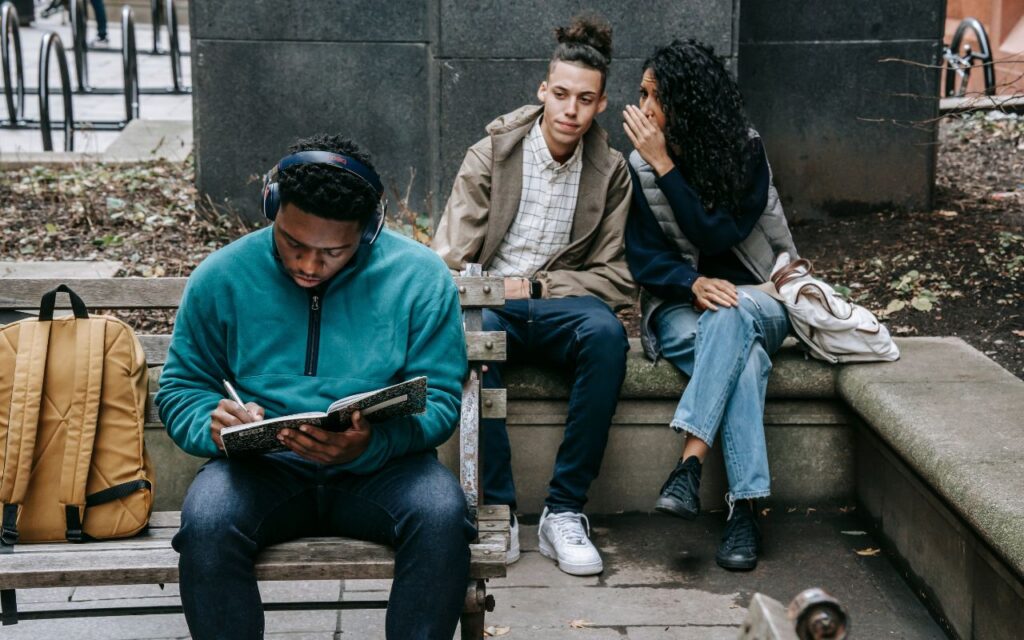
- Reluctance to interact with people from an unfamiliar group.
- Seeing one's own social group as more supreme (in terms of the
position within the society, knowledge, skills, intelligence, etc.).
Generally speaking, othering entails setting boundaries between the majority and minority populations and excluding people who are perceived as outsiders from the broader community.
How to minimise Othering
To confront Othering and discrimination, doesn't mean to create a society where everyone is the same. It means creating a society of inclusion and acceptance, where diversity is not an apple of discord, but a unifier. So, how can we make the world a better place?
- Be mindful of your media consumption and always maintain a critical view on the narratives. Remember that the goal of the media discourse is to create sensation and provoke public reaction. And the most effective way to achieve that is by raising controversial topics and exposing negative images.
- See individuals and not the assumed groups. The passport, language and skin colour tell virtually nothing about a person. Everyone has their own life story, experiences, reasons and motivations to live abroad and we should focus on this uniqueness.
- "Cultural identity" is a very controversial and complex concept.
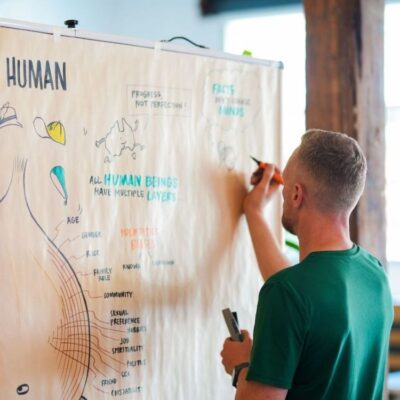
There's no such thing as a shared identity. Each individual's identity consists of countless elements, from age and gender to profession, to the most subtle personality traits.
- Recognise your own biases and bias-driven behaviours. Once you are aware of these, you can easier cope with negative patterns and get rid of prejudices.
- Celebrate diversity and expand your networks. It's natural for humans to be attracted to those who are alike, and avoid the unfamiliar. That's where Othering takes place. So, it is useful to grow your social circles with people of diverse cultural and linguistic backgrounds.
- Engage influential structures, such as, for example, media or educational institutions in promoting the right mindset within the community.
References:
Baldacchino, G., & Sammut, C. (2015). The Migration Crisis: No Human is Illegal. The Round Table, 1-3.
Bigo, D. (2002). Security and immigration: toward a critique of the governmentality of unease. Alternatives: global, local, political, 27(1).
Fassmann, H., Münz, R., & Seifert, W. (1997). Was wurde aus den Gastarbeitern? Türken und (Ex-) Jugoslawen in Deutschland und Österreich. Demographische Informationen, 57-70.
Haynes, A., Devereux, E., & Breen, M. (2006). Fear, framing and foreigners, The othering of immigrants in the Irish print media. Critical Psychology, 16, 100-121.
Lutz, H. (1991). The myth of the 'other': Western representation and images of migrant women of so called 'Islamic background'. International review of Sociology, 2(2), 121-137.
Razack, S. H. (2004). Imperilled Muslim women, dangerous Muslim men and civilised Europeans: Legal and social responses to forced marriages. Feminist legal studies, 12(2), 129-174.
Said, Edward W. 1978. Orientalism.
Shoshan, N. (2008). Placing the extremes: cityscape, ethnic 'others' and young right extremists in East Berlin. Journal of Contemporary European Studies, 16(3), 377-391.
Spivak, G. C. (1985) "The Rani of Sirmur: an essay in reading the archives", History and Theory. 24 (3): 247-272.